
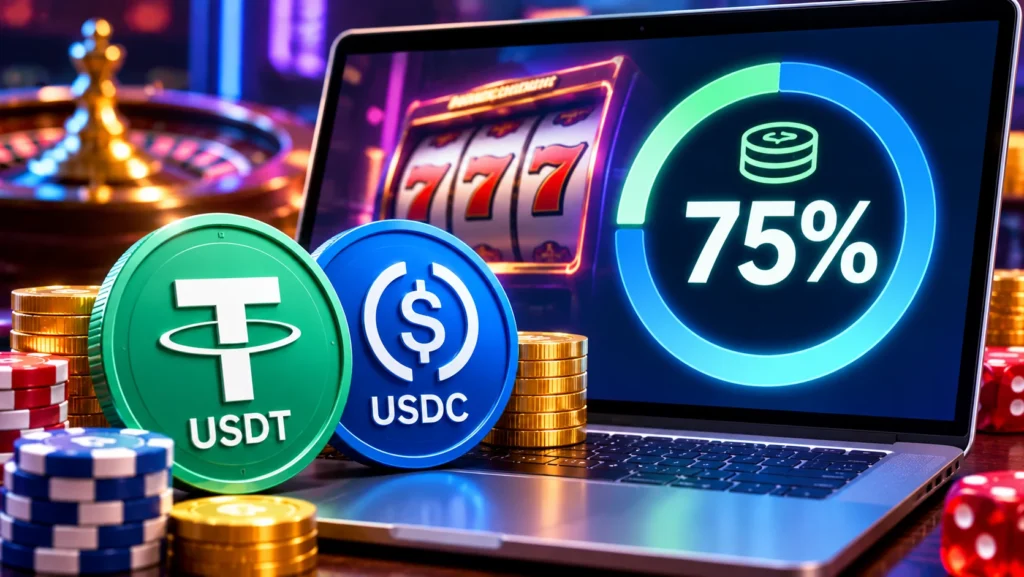
Stablecoins now account for 75% of cryptocurrency deposits at online casinos, according to a new industry report examining the growing use of dollar-pegged digital assets in online gambling.
The findings are based on six weeks of blockchain transaction data gathered during March and April 2026. The research indicates that crypto gambling is increasingly shifting away from cryptocurrencies with fluctuating values towards stablecoins designed to maintain a consistent value against the US dollar.
This change suggests that players and gambling operators are using blockchain technology primarily as a payment method rather than as a means of gaining exposure to cryptocurrency price movements.
For casino operators, stablecoins offer a way to process transactions more quickly, reduce payment expenses and limit the uncertainty associated with accepting volatile digital currencies.
Lower Transaction Fees Drive Stablecoin Adoption at Crypto Casinos
The increasing popularity of stablecoins comes as international gambling businesses continue to face challenges with conventional banking and payment processing services.
According to the report, traditional card transactions generally carry processing fees of between 1.5% and 3.5%, while operators in certain emerging markets can face charges ranging from 3% to 6% of deposit amounts.
International banking transactions can also involve lengthy processing periods, particularly when payments move between different countries and financial institutions.
Standard bank withdrawals typically take between one and five business days, while transfers processed through SWIFT and correspondent banking networks can require three to seven days.
Cryptocurrency transactions, by comparison, can be completed in less than ten minutes, although actual settlement times depend on the blockchain network and payment provider involved.
These differences are encouraging some gambling operators to explore stablecoin payments as an alternative to traditional banking infrastructure.
By reducing reliance on slower payment networks, operators may be able to improve transaction efficiency while offering customers faster access to deposited and withdrawn funds.
European and US Regulations Provide Greater Clarity for Stablecoin Payments
Regulatory developments in Europe and the United States could further influence how gambling companies adopt stablecoin technology.
The report identifies an 18-month period of regulatory changes that may provide clearer operating requirements for businesses handling cryptocurrency payments.
In the European Union, the Markets in Crypto-Assets Regulation (MiCA) has established a regulatory framework for digital asset businesses, with the transitional period for crypto-asset service providers ending in July 2026.
In the United States, the GENIUS Act is introducing federal rules governing payment stablecoins, with implementation expected by January 2027.
These developments are intended to establish more consistent requirements for digital asset providers, potentially giving gambling operators greater certainty when selecting payment and settlement partners.
The research also highlights the concentration of stablecoin gambling activity among two major cryptocurrencies.
Tether (USDT) and USD Coin (USDC) collectively account for 89% of stablecoin gambling transactions, making them the dominant digital assets used for this type of payment.
Their widespread use reflects the growing preference for cryptocurrencies linked to the US dollar rather than assets whose market values can change significantly between deposits and withdrawals.
Cryptocurrency Gamblers Place Higher Average Wagers Than Fiat Players
The report also identifies differences in betting behaviour between customers using cryptocurrency and those depositing with traditional currencies.
Figures from gambling technology provider SOFTSWISS indicate that average cryptocurrency wagers are approximately twice as large as bets made using fiat currencies.
One platform included in the research recorded an average customer deposit of slightly less than $4,000, highlighting the substantial transaction values that some crypto gambling businesses handle.
However, access to cryptocurrency gambling remains subject to regulatory restrictions.
Whether a customer can deposit or withdraw using digital assets depends on the gambling operator’s licence, the payment methods it supports and the laws applicable in the player’s jurisdiction.
As a result, cryptocurrency payment options may be available in one market while remaining restricted or unavailable in another.
Larger deposit values also place greater importance on how gambling operators manage and safeguard customer funds.
Businesses processing substantial cryptocurrency balances must consider secure asset custody, transaction monitoring and appropriate financial controls to reduce operational and security risks.
Stablecoins Gain Importance in the Online Gambling Payment Market
The research suggests that stablecoins are becoming an increasingly established part of cryptocurrency gambling infrastructure, driven largely by their practical payment benefits.
With three out of every four crypto casino deposits attributed to stablecoins in the study, the findings indicate a growing preference for digital currencies that offer more predictable values and efficient settlement.
For operators, the appeal lies in potentially lower processing costs, faster international transactions and reduced exposure to cryptocurrency price volatility.
At the same time, regulatory changes in Europe and the United States are creating more defined requirements for companies involved in issuing, holding and transferring digital assets.
These developments could influence how licensed gambling businesses integrate cryptocurrency payments into their existing financial systems.
While stablecoins may address some of the limitations of conventional banking, their wider adoption will continue to depend on regulatory approval, secure custody arrangements and effective transaction monitoring.
The report ultimately points towards a crypto gambling market increasingly focused on the efficiency of blockchain payments rather than the speculative value of the cryptocurrencies being used.